
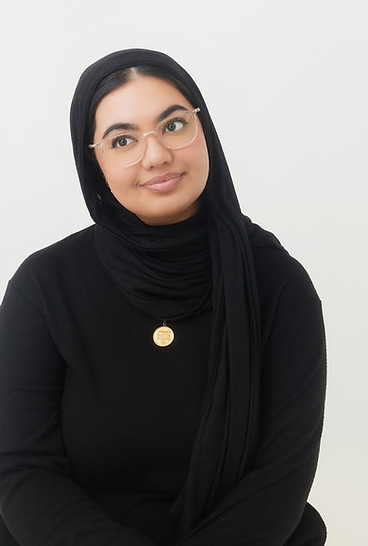
About Ashna
Seeking support can be an important step toward understanding yourself and moving through life’s challenges with greater clarity. My name is Ashna, and I’m here to support you in rediscovering your strengths, gaining insight into your experiences, and moving forward in ways that feel meaningful to you. My priority is to provide a compassionate, safe, culturally-informed, and non-judgmental space where you feel heard and respected.
As a Pakistani Muslim woman, I understand that navigating different cultural expectations, family values, and societal pressures can sometimes feel complex. Balancing personal goals, identity, and relationships while honoring cultural or faith-based values can be a delicate process, and it can feel even more challenging when you are also experiencing stress, burnout, relational conflict, or uncertainty about the future. I recognize that opening up about these experiences can feel vulnerable, which is why I approach therapy with curiosity, warmth, and openness. I strive to ask thoughtful questions and create space for you to explore your experiences in ways that feel meaningful and authentic to you. Through my work in research and community settings, I have had the opportunity to support individuals and families from diverse backgrounds, which has reinforced my belief that people are resilient and capable of navigating difficult life experiences when they feel supported. My practice is grounded in empathy and collaboration, with a focus on recognizing your strengths and fostering a genuine sense of connection.
I have a background in psychology from the University of Toronto and am currently completing my Master of Arts in Counselling Psychology at Yorkville University. My experience includes working in research and community settings, including roles at Baycrest and the Centre for Addiction and Mental Health (CAMH), where I supported neuropsychological research. I have also worked with Kerry’s Place Autism Services, supporting individuals on the autism spectrum in community-based environments. These experiences have deepened my understanding of the importance of empathy, patience, and creating spaces where people feel safe, respected, and supported in their unique experiences.
Outside of work, I enjoy spending time with family and friends, exploring new cafés and restaurants around the city, and making space for reflection and connection in everyday life. If you’re considering taking the next step, I’d love to connect. Book a free 15-minute consultation to explore whether therapy feels like the right fit for you!
How We Might Work Together
I can help with:

I often find that young adults and youth connect well with my approach, especially those navigating questions of identity, change, and finding their place in the world.
I enjoy working with clients who bring curiosity, a sense of humour, and a willingness to explore their experiences through storytelling. I feel particularly connected to supporting clients navigating anxiety, self-doubt, and the tension between what they think they should feel and what they actually feel.
I enjoy helping clients better understand the relationship between their thoughts, emotions, and behaviours while exploring their values and what truly matters to them. Clients with intersectional identities, including those navigating culture, family expectations, and societal pressures, often resonate with my approach.
My own experiences have shaped my understanding of the complexity of identity, and I strive to create a space where clients feel seen as whole people—not just through their challenges, but through their strengths, stories, and lived experiences.
Patterns & Topics That Frequently Come Up in Session
One of the conversations I often have with clients in the first few sessions is around uncertainty: "I've never done therapy before," or "I don't know what to expect." I remind clients that therapy looks different for everyone and that there is no right or wrong way to approach the process. It is a deeply personal journey, and together we will figure out what feels most helpful and meaningful for them.
Across different clients and experiences, I notice similar themes emerge. Many people struggle with self-criticism, self-doubt, and feeling like they are not enough. I often help clients explore the gap between what they know logically and what they feel emotionally—the moments when the "brain" and the "mind" feel disconnected. Rather than judging these experiences, we work toward understanding their thoughts, emotions, and patterns with more compassion.
The conversations that feel especially meaningful to me are the ones that explore deeper questions: What has shaped the way you move through the world? What qualities matter to you? Who do you want to become, and why? I believe therapy is not only about addressing challenges but also about helping people reconnect with their values, strengths, and sense of self.
What Inspires My Work as a Therapist
Although I am still early in my journey as a therapist, even in this short time, I have already seen the moments that remind me why this work matters. It is often the small shifts that stand out the most—the moments when a client feels a little more calm, gains clarity, recognizes their strengths, or leaves with a little more hope than when they arrived.
My clients have taught me that healing is not a linear process. Growth can come in waves, look different for everyone, and there is no single solution that works for every person. Each individual's journey requires patience, curiosity, and a willingness to meet them where they are.
What continues to inspire me are the moments when clients begin to see themselves differently—when they challenge long-held negative beliefs, recognize their own value, or reconnect with what truly matters to them. These moments remind me that change does not always happen through major breakthroughs; sometimes it happens through small conversations, small realizations, and small steps forward.
Every interaction that creates even a little more understanding, self-compassion, or connection reminds me that growth is possible.
What I Wish More People Knew About Mental Health & Healing
I wish more people gave themselves permission to be upset. There is often a misconception that working on your mental health means you should always feel calm, positive, or happy, but that is not the reality of being human. Difficult emotions are a normal and meaningful part of life.
I want people to know that it is okay to feel anger, frustration, disappointment, or even negative feelings toward others. Having these emotions does not make someone a bad person—it makes them human. The goal is not to eliminate difficult feelings, but to understand them, learn what they are communicating, and find healthier ways to navigate them.
Therapy is not about becoming someone who never struggles; it is about building the awareness and tools to move through those struggles with more compassion and understanding.
Modalities
Specialties
What's My Story
When I think about what has shaped me as a future therapist, I think about the many spaces I've moved through and the people who have trusted me with their stories. I identify as a Pakistani Muslim woman from an immigrant background, and I've often felt like a third culture kid, learning to navigate different cultures, expectations, and identities at the same time. Those experiences have taught me that people are rarely defined by one part of who they are. We all carry multiple identities, relationships, and life experiences that influence how we see the world, and I try to bring that understanding into every interaction with clients.
Working within my own community has shown me the importance of meeting people with curiosity rather than assumptions. I've seen how culture, faith, family expectations, and systemic barriers can all intersect in ways that shape someone's mental health. It's reminded me that one of the most meaningful things I can offer as a therapist is a space where people don't feel like they have to explain or defend who they are before they can begin healing.
My work with neurodivergent individuals has also had a profound impact on me. It has taught me to slow down, to be flexible, and to recognize that there is no one "right" way to experience or move through the world. Alongside my background in research, I've become more aware of the gaps that exist in our mental health and healthcare systems, particularly for people whose needs are often overlooked. These experiences have strengthened my commitment to providing care that is collaborative, individualized, and grounded in both evidence and compassion.
Some of the most important lessons I've learned about healing have come from my own experiences with therapy and the healthcare system. I've experienced the difference it makes when a provider truly shows up—when they listen without judgment, remember the small details, and create a space where you feel safe enough to be honest. Those moments stayed with me. They reminded me that healing doesn't always come from having the perfect intervention; sometimes it begins with feeling genuinely seen and understood.
As I continue to grow as a therapist, I hope the people I work with experience those same qualities. I want to be someone who listens deeply, approaches every client with humility and openness, and recognizes that they are the expert on their own life. If clients leave our sessions feeling a little more understood, a little less alone, and a little more hopeful than when they arrived, then I know I'm becoming the therapist I aspire to be.
Education
Languages
What Misconceptions About Therapy Do You Often Challenge?
One of the biggest misconceptions I often challenge is the idea that therapy is about someone telling you what to think or giving you all the answers. Therapy is not about being “fixed” or finding a quick solution—it is a process of getting to know yourself, exploring your experiences, and working collaboratively toward change.
I also often remind clients that there is no single “right” way to heal or take care of yourself. Mental health does not have to look like a perfect morning routine, daily yoga, or constant productivity. Everyone’s version of wellness will look different depending on their needs, values, and circumstances.
I think one of the biggest misunderstandings about growth is that change happens overnight. In reality, growth is often gradual and comes through small moments of awareness and reflection. I also want people to know that it is completely okay to feel nervous before a first session. Therapy can feel vulnerable, but you do not need to have everything figured out before you begin—you just need to show up.
What's It Like To Work With Me
My approach is a balance of being easygoing, direct, and reflective. Clients often appreciate feeling seen as individuals, being gently challenged when needed, and the humour and lightness I bring into sessions. I believe therapy can hold space for both difficult conversations and moments of connection.
Something that may surprise clients is that my style is fairly laid-back. As a younger therapist, my communication style is often relatable and conversational while still being intentional and professional. Ultimately, I hope clients experience me as someone who is approachable, authentic, and genuinely invested in their growth.